
How to Track Income and Expenses (Without Losing Your Mind)

Let’s be honest: tracking your money can feel like a chore. Most people start the year with great intentions, only to abandon their budgets by February because their tracking system is either too complicated or completely non-existent.
If you do not know exactly where your money is going, you cannot hit your financial goals. Whether you want to scale your business, save for a house, or just stop wondering where your paycheck went, mastering your cash flow is step number one.
In this guide, we will break down a simple, stress-free way to track your income and expenses, plus show you how to automate the boring parts.
Why Most Budgeting Systems Fail
Before looking at how to track your money, let’s look at why most methods fail:
- Overly complex apps: Many apps require you to link bank accounts, crash frequently, or charge annoying monthly subscriptions.
- Manual math errors: Building a tracker from scratch often leads to broken Excel formulas and incorrect totals.
- Lack of consistency: If a system is clunky, you simply will not use it.
The best financial system is the one you actually stick with. For 90% of people, a clean, visual spreadsheet is the perfect sweet spot between power and simplicity.
Step 1: Separate Your Categories (Keep It Simple)
Do not overcomplicate your tracking by creating 50 different categories. Group your transactions into broad, easy-to-manage buckets.
Income Categories
- Primary Salary / Freelance Revenue
- Side Hustles / Passive Income
- Investments / Dividends
Expense Categories (Fixed vs. Variable)
- Housing & Bills: Rent/mortgage, utilities, insurance.
- Daily Living: Groceries, transport, fuel.
- Lifestyle: Dining out, entertainment, shopping.
- Savings & Debt: Emergency fund deposits, credit card payments.
Step 2: Set a Fixed Money Date
Tracking your money should not take hours. Set a recurring calendar invite for yourself every Sunday morning or every second Friday. Spend just 15 minutes opening your bank statements and logging your numbers. Keeping it consistent prevents a mountain of receipts from piling up at the end of the month.
Step 3: Analyze Your Monthly Cash Flow
Data without analysis is useless. At the end of every month, ask yourself three critical questions:
- Did I spend less than I earned? (Net Positive Cash Flow)
- Which category surprised me the most? (Usually dining out or subscriptions)
- What percentage of my income went to savings?
The Shortcut: Stop Building From Scratch
You could spend the next three hours watching tutorials, fighting with SUMIF formulas, and trying to design a pretty dashboard in Google Sheets.
Or, you can start tracking your money flawlessly in the next two minutes.
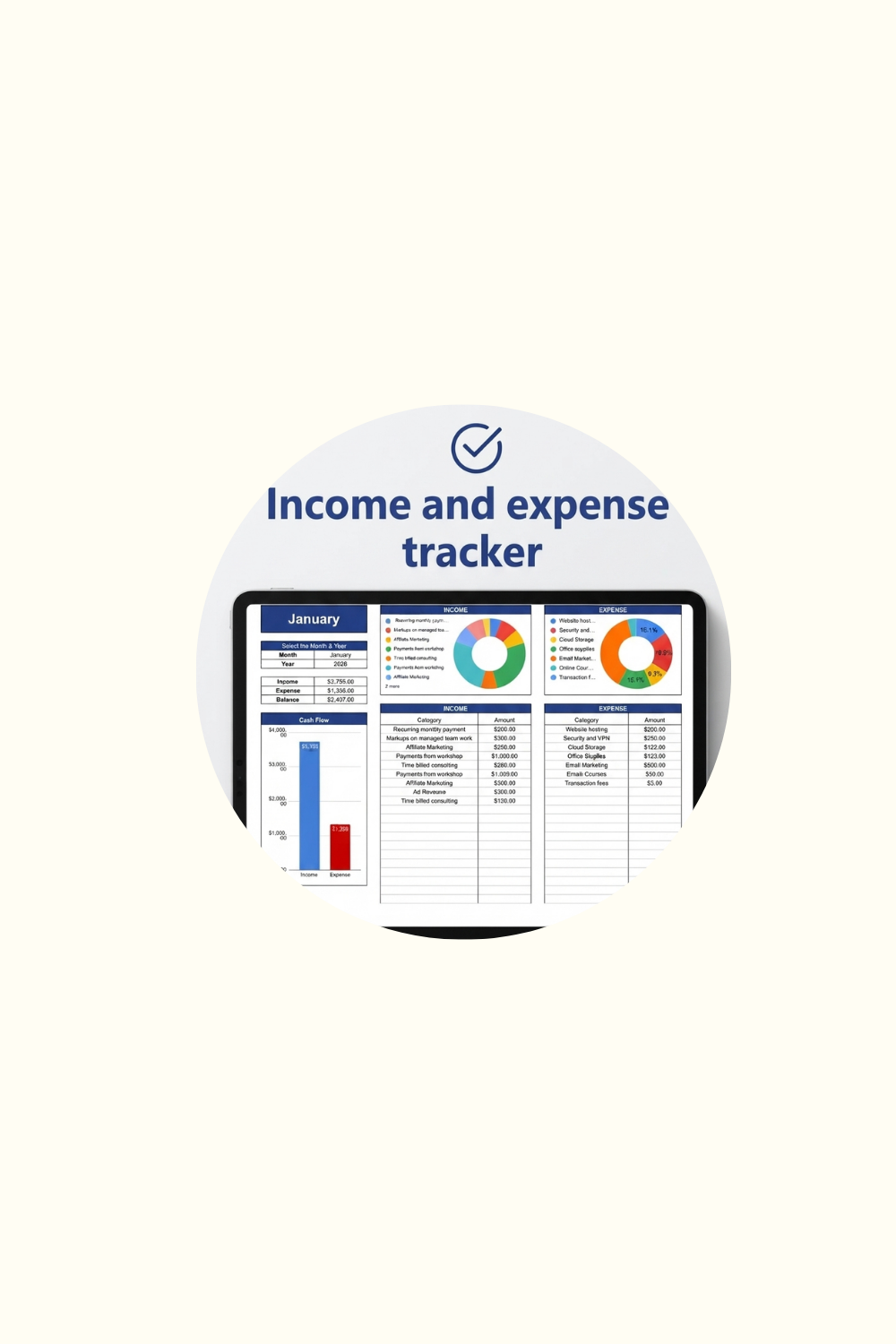
We built the ultimate Income and Expense Tracker Spreadsheet for Google Sheets to do all the heavy lifting for you.
Download the Income and Expense Tracker Template Here
Why you will love this tracker:
- Automated Dashboards: Type in your numbers, and watch your charts update instantly.
- No Subscription Fees: Pay once, use it forever.
- Zero Excel Experience Needed: Clean, intuitive, and completely ready to use out of the box.
Take control of your financial future today. Grab your copy, plug in your numbers, and finally get the clarity you deserve.